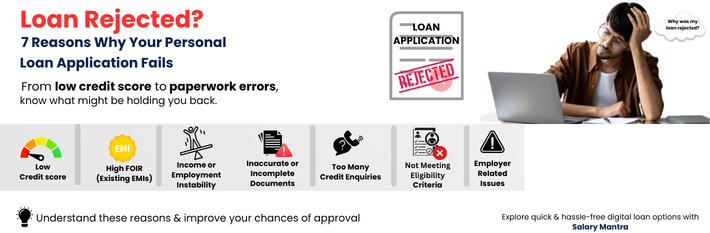
Loan Rejected? 7 Reasons Why Your Personal Loan Application Fails
Getting your personal loan application rejected can be frustrating, especially when you need funds for an urgent expense. A loan application may be rejected because of a low credit score, high existing financial obligations, unstable income, incomplete documents, multiple credit enquiries, or failure to meet the lender's eligibility criteria.
Understanding these reasons can help you identify potential issues and improve your chances of approval when you apply again.
If you are looking for a convenient digital borrowing option, Salary Mantra provides access to loans of up to ₹1,50,000, subject to eligibility, verification, and applicable lender terms.
Quick Overview: Personal Loan Rejection Reasons & Solutions
| Rejection Reason | Common Cause | What You Can Do |
|---|---|---|
| Low Credit Score | Poor repayment history or defaults | Pay EMIs and credit card bills on time |
| High FOIR | High existing EMIs and obligations | Reduce outstanding debt |
| Income Instability | Frequent job changes or unverifiable income | Keep salary and bank documents ready |
| Documentation Errors | Incorrect or incomplete KYC | Verify all details before submission |
| Multiple Credit Enquiries | Applying with several lenders | Avoid multiple applications in a short period |
| Eligibility Mismatch | Not meeting age or income criteria | Check eligibility before applying |
| Employer-Related Issues | Employer may not meet lender criteria | Choose a suitable lending platform |
These are among the key factors lenders consider while assessing an applicant's repayment capacity.
7 Major Reasons Why Your Personal Loan Application Gets Rejected
1. Low Credit Score or Poor Credit History
Your credit history gives lenders an indication of how responsibly you have handled credit in the past.
A low credit score, missed EMI payments, credit defaults, or settled accounts can negatively affect your loan application.
Common issues include:
- Late EMI or credit card payments
- Loan defaults
- Written-off or settled accounts
- Limited or insufficient credit history
Before applying for a personal loan, check your credit report and make sure there are no incorrect entries.
You can also explore Salary Mantra to understand available digital borrowing options.
2. High Fixed Obligation to Income Ratio (FOIR)
Having a good credit score does not always guarantee loan approval. Lenders also consider your existing financial obligations.
FOIR represents the portion of your income that is already committed toward EMIs and other fixed obligations.
For example, if a significant portion of your monthly salary is already being used for existing EMIs, taking another loan may increase your repayment burden.
How can you improve it?
- Pay off smaller outstanding debts
- Reduce unnecessary credit card balances
- Avoid taking multiple loans simultaneously
- Maintain sufficient disposable income
3. Income or Employment Instability
Lenders generally look for a stable and predictable source of income before approving an unsecured loan.
Frequent job changes, short employment history, or income that cannot be properly verified may affect your application.
For salaried applicants, maintaining proper salary slips and bank statements can make income verification easier.
If you are planning to apply for a loan for salaried employees, keep your employment and income documents updated.
4. Inaccurate or Incomplete Documentation
Incorrect information in your application can result in verification problems or rejection.
Common documentation issues include:
- Name mismatch between PAN, Aadhaar, and bank records
- Incorrect address details
- Outdated salary slips
- Old or incomplete bank statements
- Missing KYC documents
The source blog specifically highlights KYC mismatches, outdated documents, and issues with linked identity documents as common causes of verification problems.
Tip: Carefully review every detail before submitting your application.
5. Too Many Credit Enquiries
Applying for loans with multiple lenders within a short period can result in multiple hard enquiries on your credit report.
A large number of recent enquiries may indicate that you are actively seeking credit and can affect how lenders assess your application.
Instead of applying everywhere, compare your requirements and eligibility first and then submit an application that suits your profile.
6. Not Meeting the Basic Eligibility Criteria
Every lender has its own eligibility requirements.
These may include:
- Minimum age
- Minimum monthly income
- Employment status
- Residency
- Credit profile
- Existing financial obligations
For example, if a lender has a minimum income requirement and your income falls below that threshold, the application may not qualify.
Before applying, check the eligibility requirements to avoid unnecessary loan applications.
7. Employer or Employment Category Issues
Your employer profile can also influence loan eligibility.
Some lenders may categorize employers based on factors such as company size, stability, location, and employment profile. Employees working with certain startups, small businesses, or employers outside a lender's service area may face additional eligibility restrictions.
If you are a salaried professional, make sure your employment details are accurately mentioned during the application process.
How to Improve Your Chances of Loan Approval
If your application has been rejected, don't immediately submit applications to several lenders. Instead, take some time to identify and address the reason for rejection.
Check Your Credit Report
Review your credit report for missed payments, outstanding accounts, or incorrect information.
Reduce Existing Debt
Paying down outstanding loans or credit card balances can help reduce your monthly repayment burden.
Keep Your Documents Ready
Keep recent salary slips, bank statements, PAN, Aadhaar, and other required documents ready before applying.
Check Eligibility Before Applying
Review the lender's age, income, employment, and other eligibility requirements.
Avoid Multiple Applications
Don't submit applications to multiple lenders simultaneously. Multiple credit enquiries within a short period can affect your credit profile.
Get a Loan of Up to ₹1,50,000 with Salary Mantra
If you need funds for an unexpected expense, Salary Mantra offers a digital borrowing option with loans of up to ₹1,50,000, subject to eligibility and applicable terms.
The digital process can help simplify application and verification by allowing you to complete the required steps online.
Key Features
- Loan amount: Up to ₹1,50,000
- Digital application process
- Online verification
- Paperless documentation where applicable
- Direct bank account disbursal, subject to approval
- Repayment options based on applicable lender terms
Apply Now: Salary Mantra
What Documents Are Usually Required for a Personal Loan?
Depending on the lender and applicant profile, commonly requested documents may include:
- PAN Card
- Aadhaar Card
- Recent salary slips
- Recent bank statements
- Employment details
- Other KYC documents, where applicable
The source content also identifies PAN, Aadhaar, recent bank statements, and salary slips as typical documents for loan verification.
Frequently Asked Questions
1. Why was my personal loan application rejected?
A loan application may be rejected because of a low credit score, high existing obligations, unstable income, incomplete documentation, multiple recent credit enquiries, or failure to meet eligibility criteria.
2. Can I apply again after my loan is rejected?
Yes, but first identify why the application was rejected. Improve the relevant factor before submitting another application. The source blog recommends allowing time to address credit and debt-related issues before reapplying.
3. Does a low credit score affect personal loan approval?
Yes. A low credit score or poor repayment history can make approval more difficult, although eligibility criteria vary between lenders.
4. Does applying for multiple loans affect my credit profile?
Multiple formal loan applications can result in multiple hard enquiries. Applying repeatedly within a short period may negatively affect your credit profile.
5. What documents are required for a salaried applicant?
Typically, lenders may ask for identity and address proof, salary slips, bank statements, and employment-related information. Requirements vary by lender.
6. How much loan can I get from Salary Mantra?
Eligible customers can apply for a loan of up to ₹1,50,000, subject to the applicable eligibility criteria, verification, and lender approval.
Conclusion
A rejected personal loan application does not necessarily mean you cannot borrow in the future. Understanding the reason for rejection is the first step toward improving your application.
Maintain a healthy credit profile, keep your debt obligations under control, provide accurate documentation, and check eligibility before applying.
If you are looking for a digital borrowing option, you can visit Salary Mantra and check the available loan options of up to ₹1,50,000, subject to eligibility and applicable terms.
